
 Türkçe
 English
 Española
 German
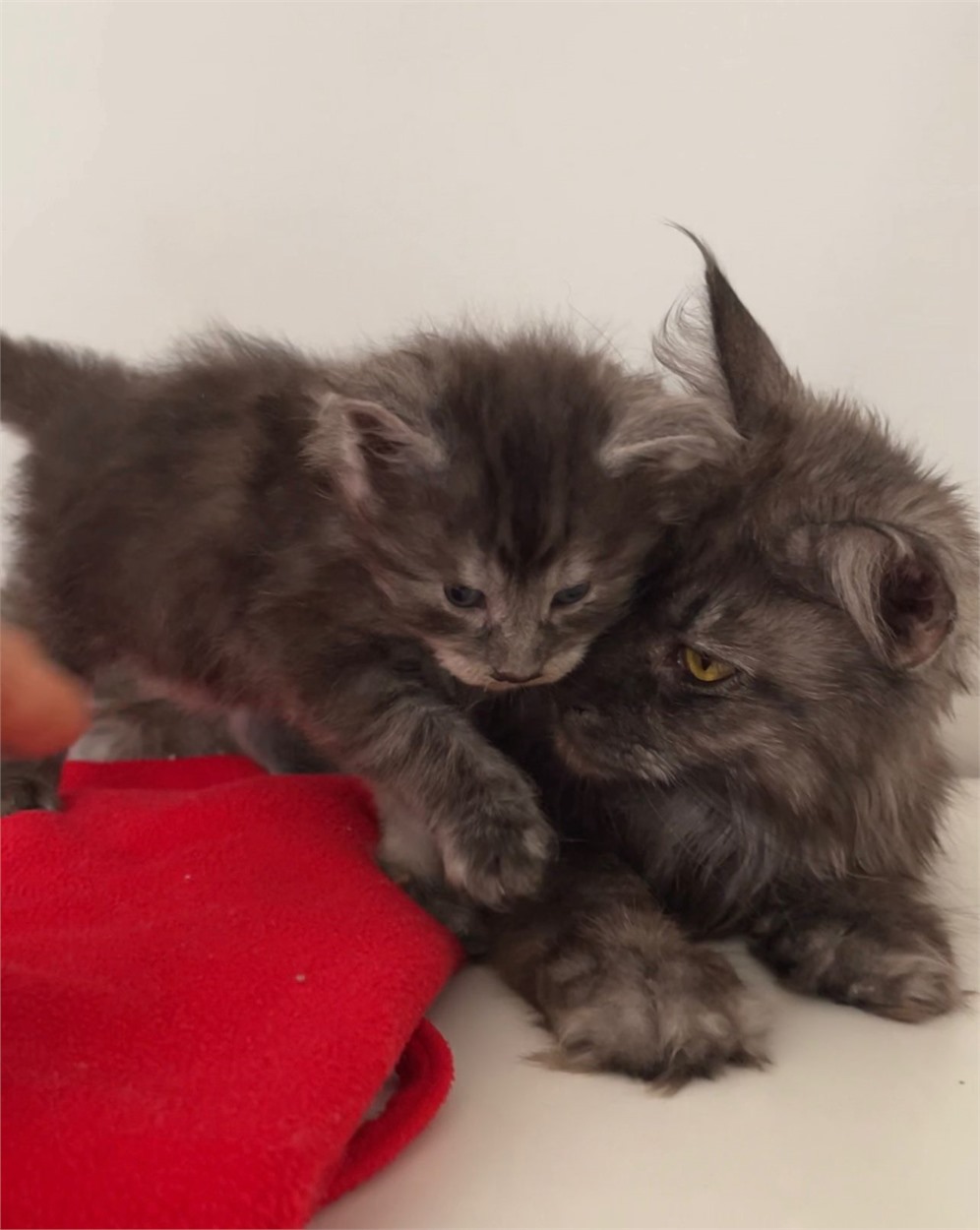
Maine Coon kittens go through rapid physical and behavioral development during the first months of life. Experiences gained during this period, care routines and nutritional support create an important foundation for later life.
The mother''s milk period, weaning process, veterinary checks and nutrition transitions play a critical role in healthy development. For this reason, the development stages should be understood correctly.
In this guide, we discuss the first months after birth and the basic development processes of Maine Coon kittens.
The first days after birth: Newborn kittens are fully dependent on their mother. In the first days they have difficulty maintaining body temperature, their eyes are closed, hearing is not fully developed and movement is limited. Their most important needs are a safe environment and continued maternal care.
The importance of mother''s milk: Mother''s milk is a natural part of kitten development. Milk taken in the first days provides energy, supports growth and contributes to immune system development. The mother and kittens should stay in as calm an environment as possible.
Development in the first weeks: Development is very fast. Mobility increases, environmental awareness improves, interaction with siblings begins and the foundations of play behavior are formed. This period is the first step of social development.
Opening of the eyes and exploration: After the first weeks, kittens become more interested in their surroundings. Visual perception develops, mobility increases and exploratory behavior begins. Kittens should be allowed to discover safe areas.
Beginning of social development: Relationships with the mother and siblings form the basis of social development. Kittens develop play behavior, learn social boundaries and gain communication skills. Early experiences can influence behavior in later life.
What is weaning? Weaning is the natural stage in which the kitten starts moving away from complete dependence on mother''s milk and begins to meet different foods. This process should progress gradually, sudden changes should be avoided and it should be planned according to the kitten''s development.
Safe nutrition transition: New foods should be introduced in a controlled and gradual way while the kitten''s general condition is followed. Sudden changes can make adaptation difficult for some kittens.
Beginning water consumption: As kittens grow, water intake becomes important. Clean water should always be accessible, bowls should be placed in safe areas and cleaned regularly.
Veterinary checks: Regular veterinary evaluations are important during kittenhood. General health, weight development, nutrition plan and preventive health practices can be reviewed. Early follow-up helps evaluate many issues on time.
Vaccination programs: Vaccination plans are determined by the veterinarian and may vary according to regional conditions, age and health status. Individual veterinary advice should always be the basis.
Growth process in Maine Coon kittens: Maine Coons have a long development period. Many individuals mature later than other cats, continue muscle and bone development for a long time and may maintain physical development for several years.
Why is development monitoring important? Regular monitoring helps evaluate growth, follow weight changes, update the nutrition plan and observe general health. Development follow-up is not only about weighing.
The role of environmental experiences: Kittens develop behaviorally as well as physically. Safe exploration areas, positive human interactions, play activities and daily life experiences can support confidence later in life.
Moving to a new home: A kitten''s transition to a new living area is also an important stage. Maintaining routines, continuing the nutrition plan and creating a safe area can make adaptation easier.
Common misconceptions: A large breed does not have to grow too fast. More food does not mean healthier development. Not all kittens develop at the same speed.
Frequently asked questions: Mother''s milk supports early needs and natural development. Weaning progresses gradually and may differ according to the kitten. Many Maine Coons complete physical development between 3 and 5 years. Veterinary follow-up is important for preventive health and development evaluation.
The development of Maine Coon kittens includes mother''s milk, weaning, nutrition transitions, social experiences and veterinary monitoring. Managing these stages carefully can support both physical and behavioral development. Every kitten develops at its own pace, and care plans should be shaped according to individual needs. A healthy beginning forms the foundation of long-term quality of life.